

Alvisi Kirimoto designs the new Padiglione Sapaio
An architectural space dedicated to wine tasting and celebrating the land.
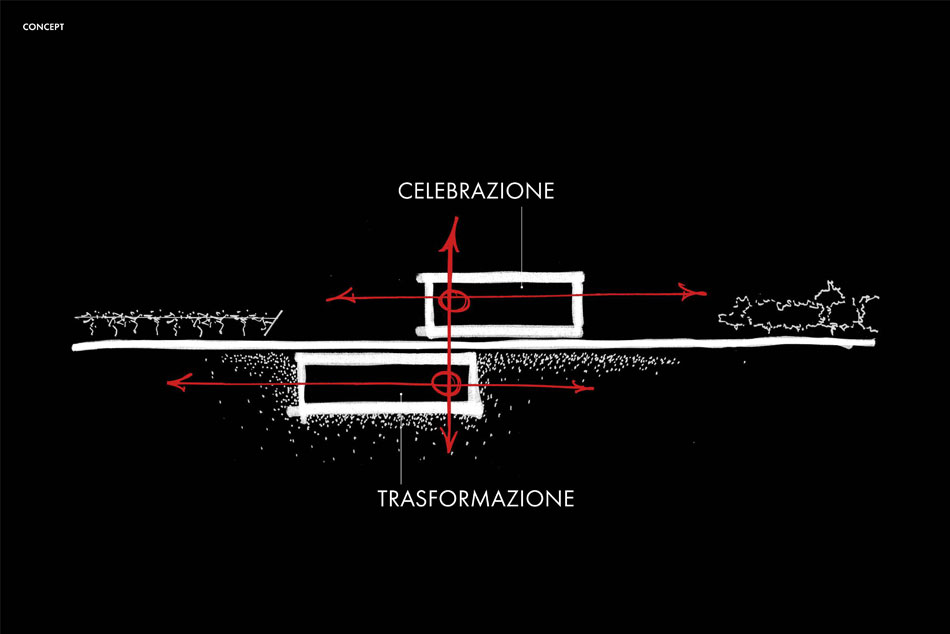
We’re thrilled to share a new chapter in our story: among the vineyards of Bibbona, Padiglione Sapaio is beginning to take shape — an architectural project designed by the firm Alvisi Kirimoto.
A structure conceived to honor the culture of wine, in harmony with the landscape and in respect of nature’s rhythm.
The new Pavilion, which will span over 1,000 square meters, will be dedicated exclusively to our “Sapaio” label — the symbolic wine of our estate. It will be both a place of production and of reflection, where wine can speak in its purest form, accompanied by art — not as decoration, but as a lateral gaze, offering new interpretations of the land.
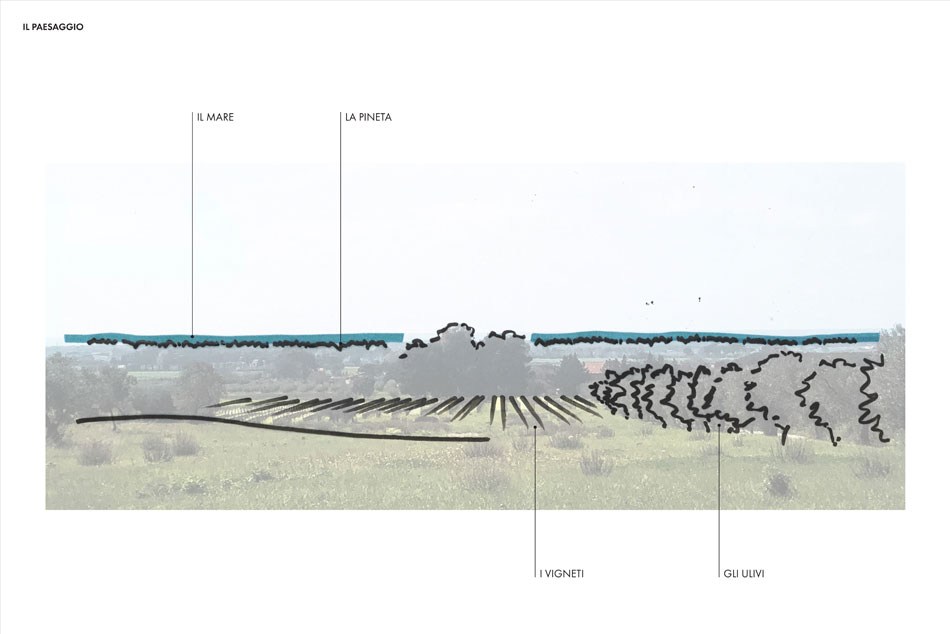
A terrace suspended between the vines will reinforce this spirit of listening and connection, opening the tasting experience to the landscape, the horizon, and to time itself. On the lower level, the fermentation and barrel rooms will be fully integrated into the terrain, in direct contact with the earth. The entire project will be guided by an architectural approach that is light and respectful — fully at the service of the wine and its natural rhythm.
“With Padiglione Sapaio, we wanted to create a foundational gesture, suspended in the landscape — one that respects the land’s identity while being guided by its natural and cultural features. Not an isolated object, but a permeable space where architecture welcomes the light, sounds, and rhythms of the countryside, transforming them into building material,” explains architect Massimo Alvisi, co-founder of the studio.
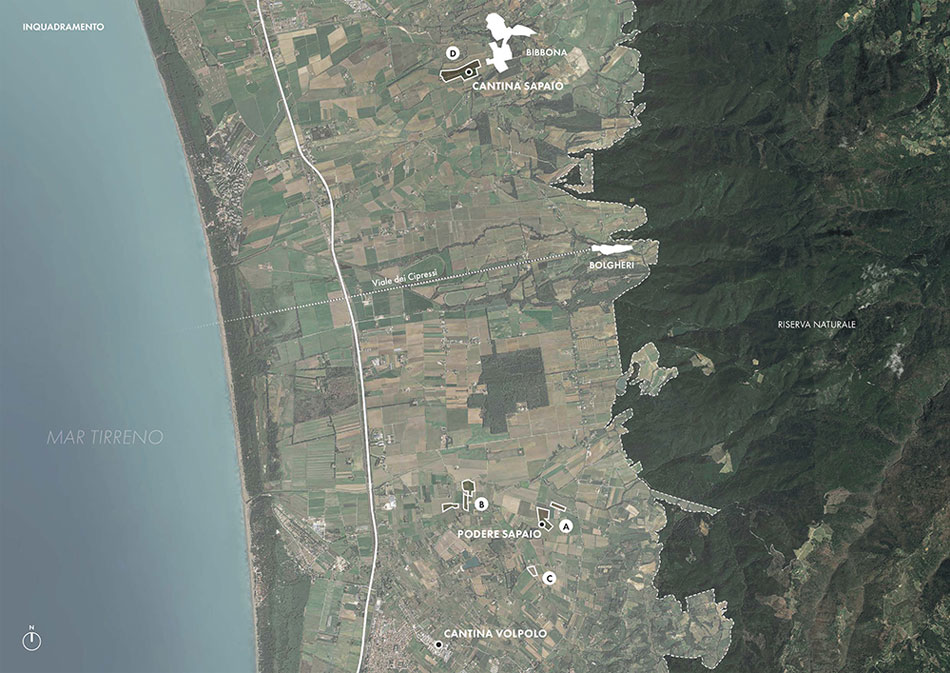
This new space — both a home and a horizon — will tell the story of Sapaio with even greater coherence, preserving the silence of production while bringing to life the essence of a wine that embodies research, listening, agricultural craft, and vision.
“The production of Sapaio bears the mark of a craftsmanship that reveals itself in its proximity to art. I’ve always seen my work as a winemaker — and more broadly as a farmer — as an ongoing dialogue with the landscape and with all surrounding beings, organic and inorganic.
Agricultural practices are, by necessity, an exercise in selection and therefore of control: privileging certain organisms over others. The architecture I envisioned, functional to these agricultural practices — even in their ritual dimension — certainly asserts itself as a new presence in the landscape. At the time of the first excavations, I almost perceived it as a wound.
But imagining it completed, as conceived by Massimo Alvisi and Junko Kirimoto — a pavilion — it immediately (and physically) opens up to a dialogue with the surrounding space, in search of reconciliation and re-inclusion with everything that its presence, consciously or not, may have affected or may affect,” concludes Massimo Piccin.
The inauguration of Padiglione Sapaio is scheduled for completion by 2027.